Fall 2024 New Graduate Student Seminar Series
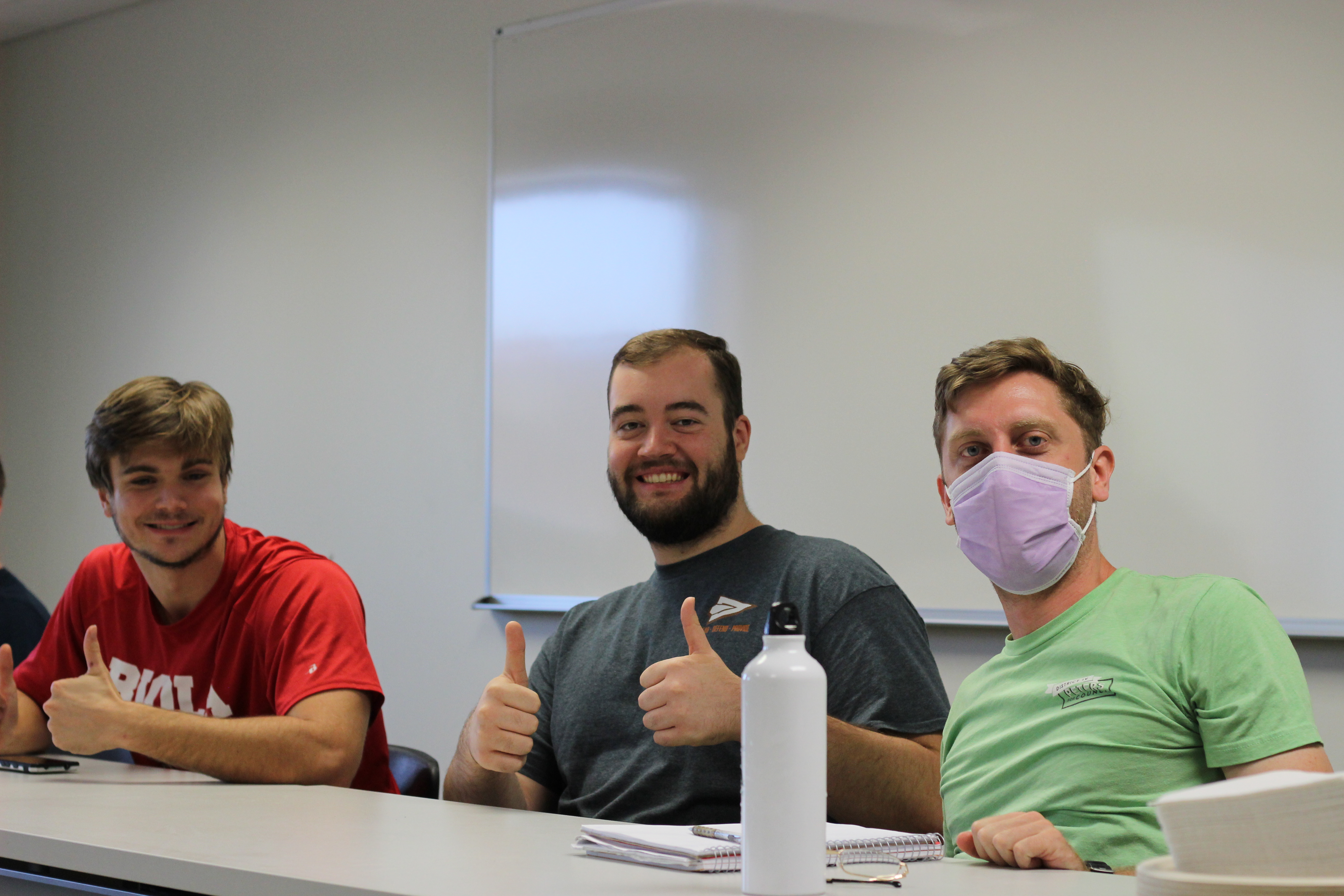
This fall semester mathematics graduate students launched their inaugural New Graduate Student Seminar Series.
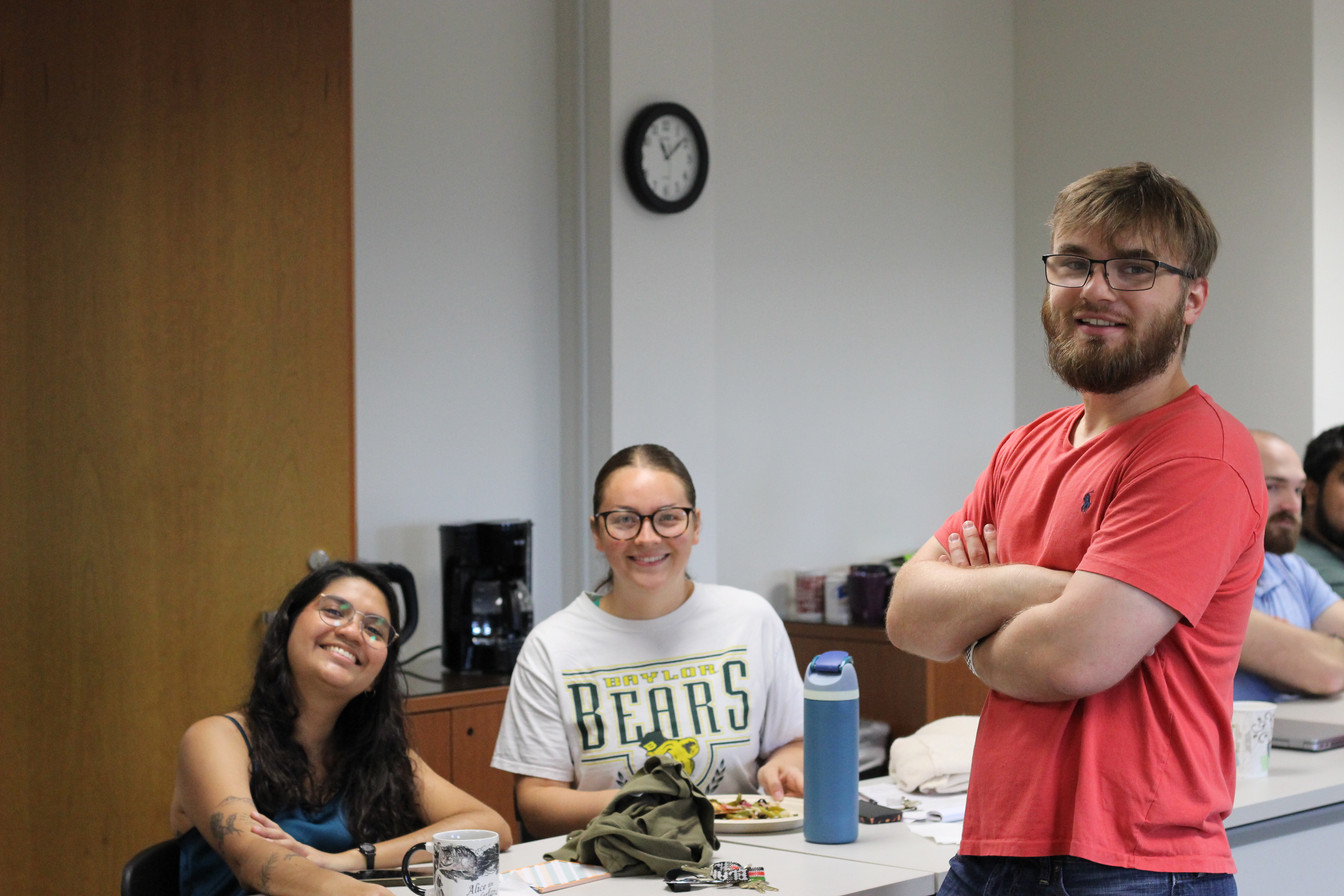
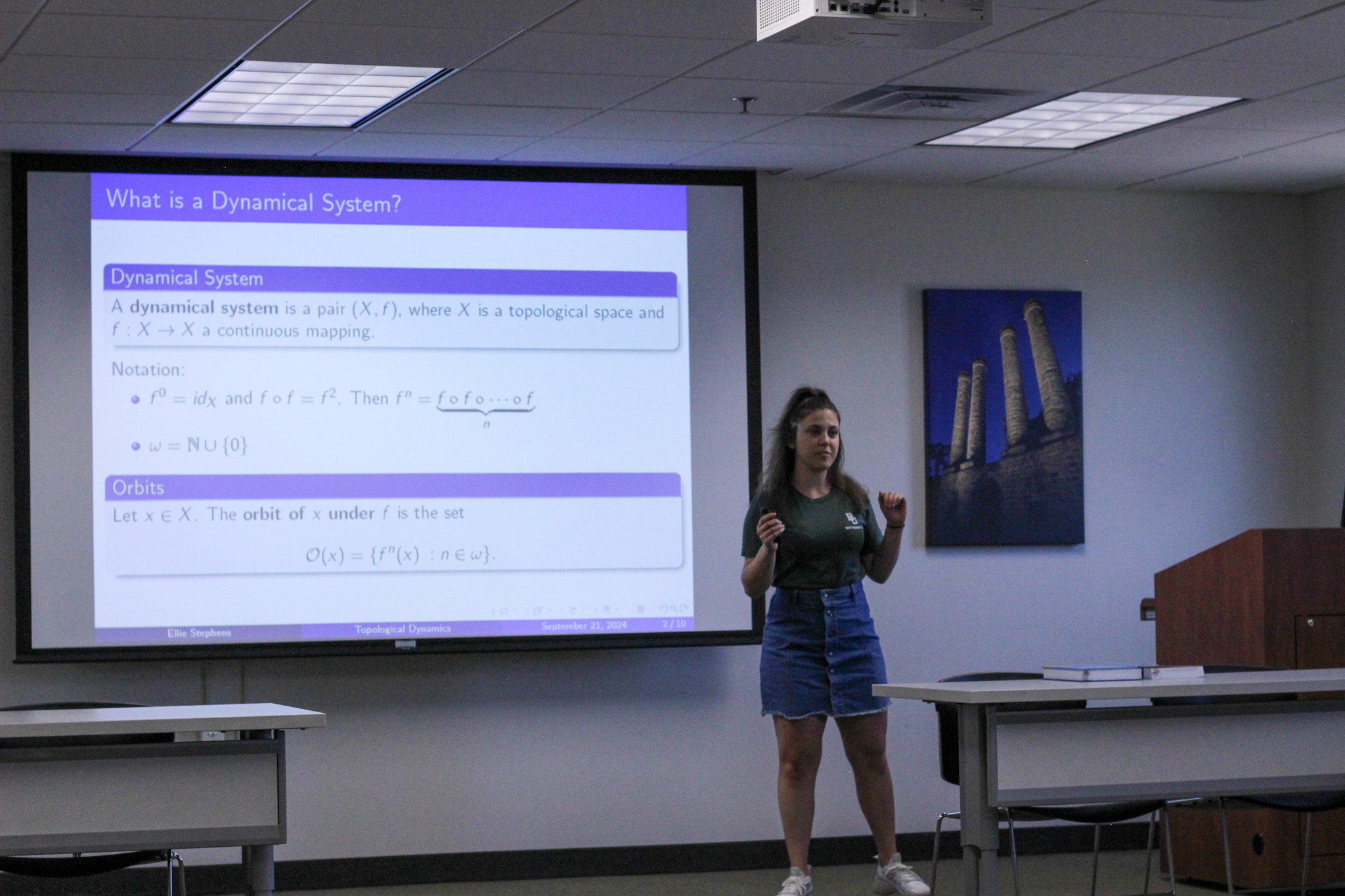
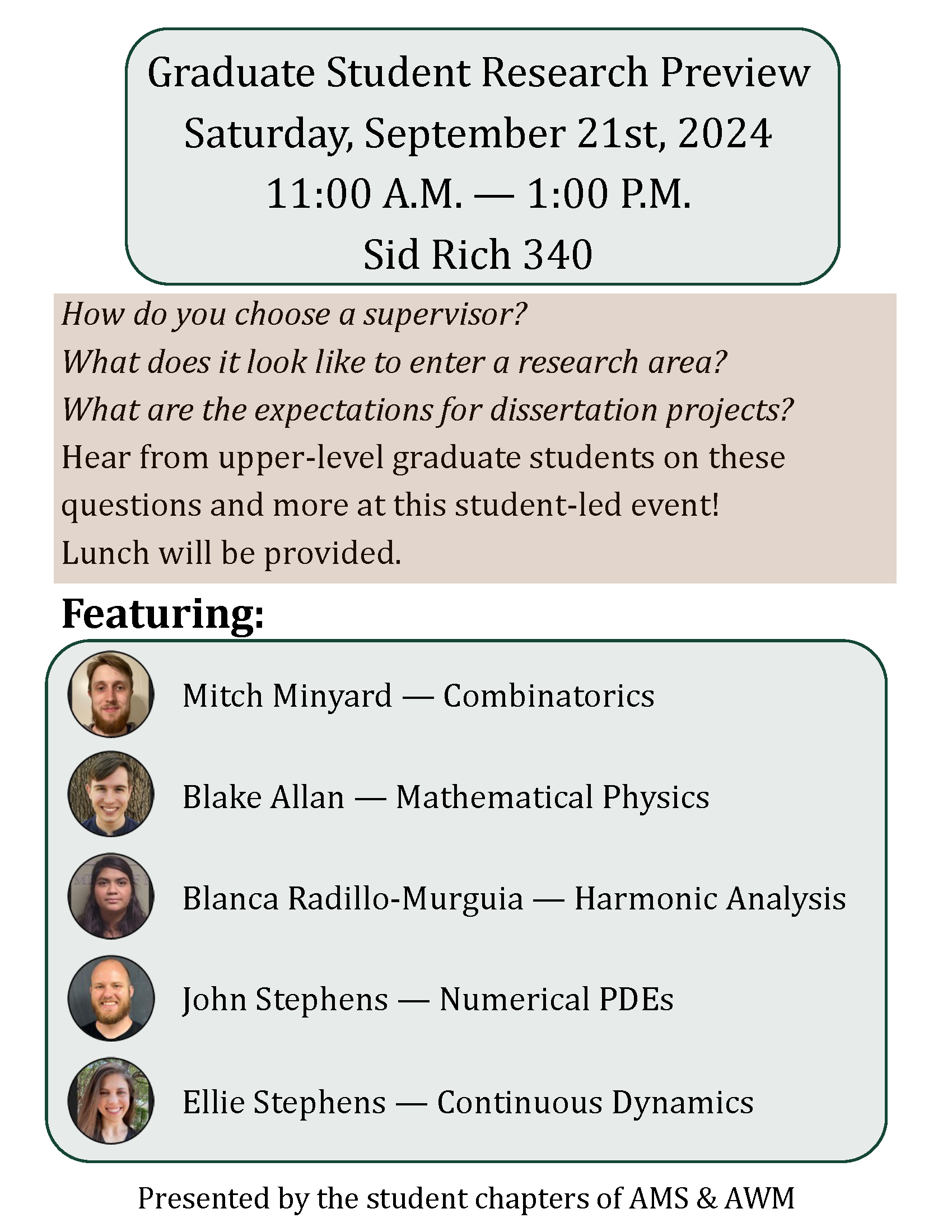
The initial meeting focused on research culture and topics within the Baylor mathematics department, catering to first- and second-year students interested in the experiences and priorities in research. Five graduate students presented on how they chose their research supervisors, what the experience of partnering with them is like, and provided a technical look at their current research projects. The day also included time for recreational activities, allowing the students to relax and connect outside of their academic work. The Presenters included:
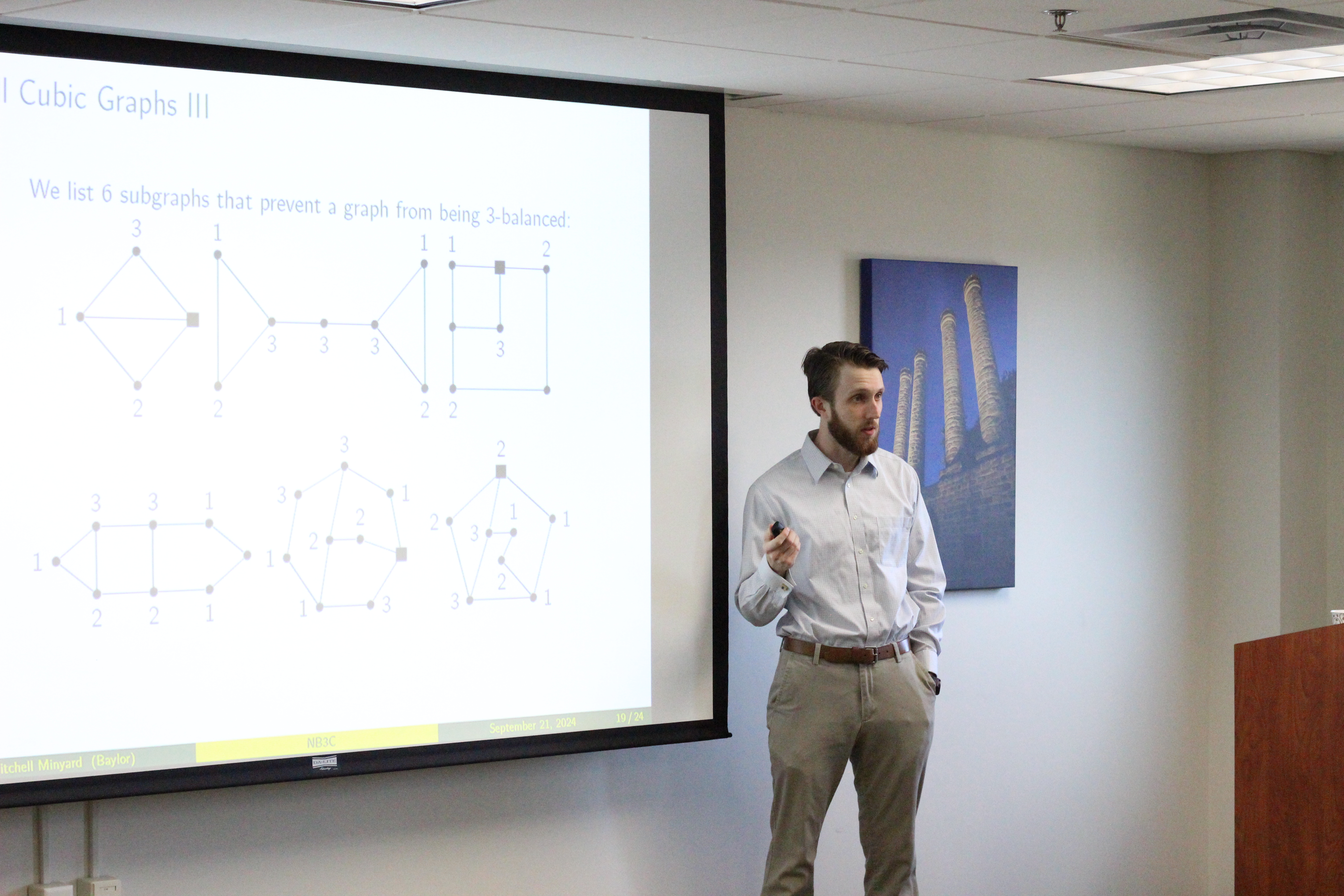
- Mitch Minyard - Neighborhood 3-Balanced Graphs
“We investigate what graphs have the 3-balanced property, where every neighborhood can be colored such that, it has equal amounts of each color. Furthermore, we present ways to construct 3-Balanced graphs and give some necessary conditions for a graph to be 3-balanced.”
- Ellie Stephens - Topological Dynamics
“My research is studying variations of the shadowing property. In particular, I defined a new property, called the neighborhood N-shadowing property, and am studying its relationship to mixing dynamical systems.”
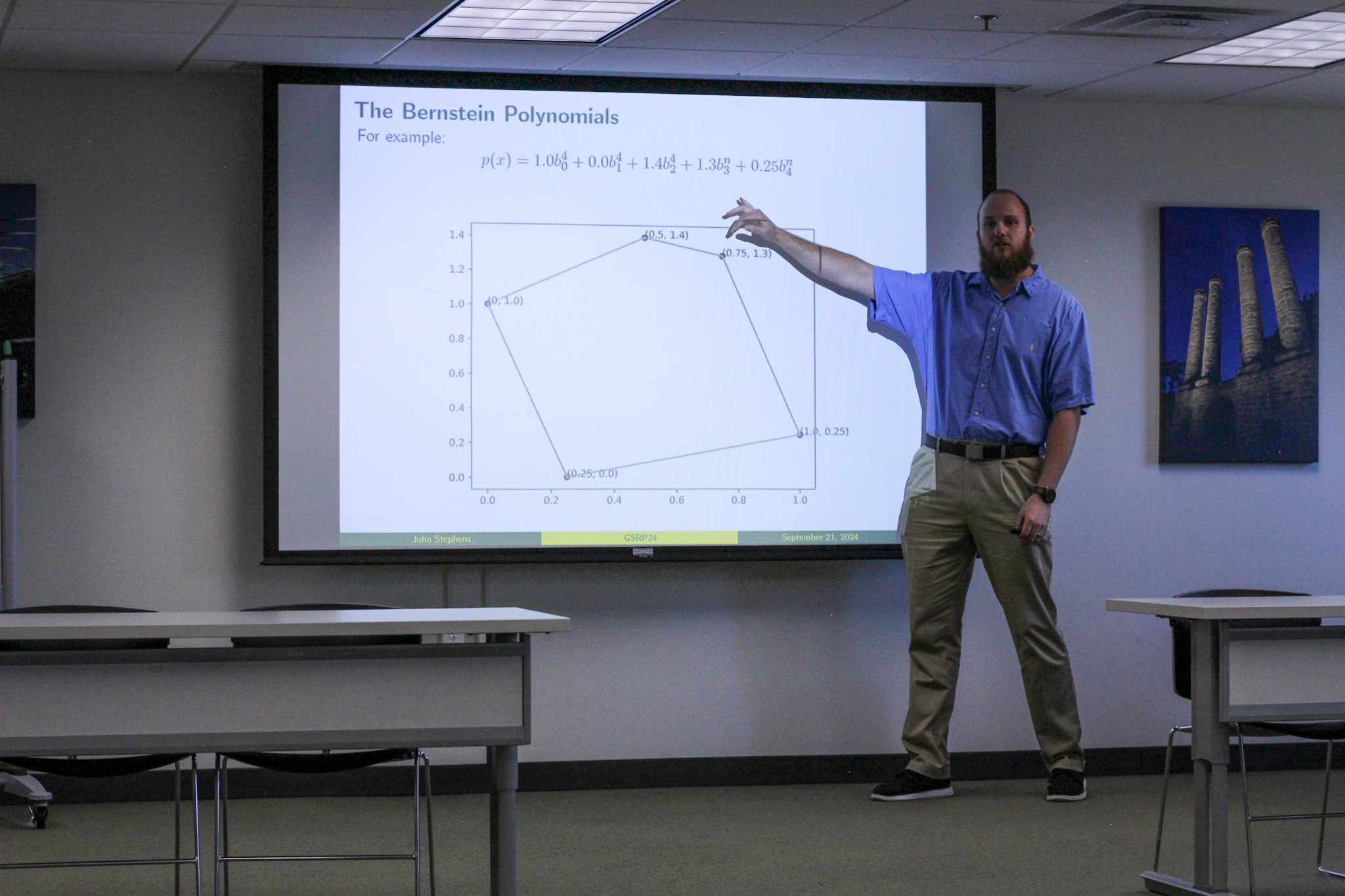
- John Stephens - Uniformly Bounds-Constrained Numerical Methods via Bernstein Polynomials
“The solutions to many partial differential equations are known to satisfy bounds constraints. In this work, we present a modification of implicit Runge-Kutta methods which allows for the time advancement of finite element methods subject to bounds constraints. Using the geometric properties of the Bernstein polynomials, we can produce an approximate solution which will satisfy the bounds constraints uniformly in time and space. In this talk, emphasis is placed on the numerical solution of the Allen-Cahn equation. Current work seeks to extend these methods to more elaborate systems of partial differential equations, and to study the convergence, stability, and efficiency of these techniques.”
- Blanca Radillo-Murguia - Differentiation Theorems and Maximal Operators
“My current research is inspired by one of the most classical theorems in mathematics: the Fundamental Theorem of Calculus. This theorem is really about the limit of averages of functions on intervals whose length tends to zero. How can we extend the Fundamental Theorem of Calculus in higher dimensions? Can we get a similar conclusion if the function is not continuous?”
- Blake Allan - Critical Dipole Moments
“I work at the intersection of spectral theory and mathematical physics under the direction of Fritz Gesztesy - particularly on Sturm--Liouville operators, which arise naturally in a wide range of quantum-mechanical problems. Building on the classical results of von Neumann, Weyl, Titchmarsh, Kodaira, and others, I use tools from complex analysis to investigate spectral properties of these operators. The dipoles project settles rigorously a 1947 conjecture of Fermi and Teller concerning the binding of negative energy mesons.”
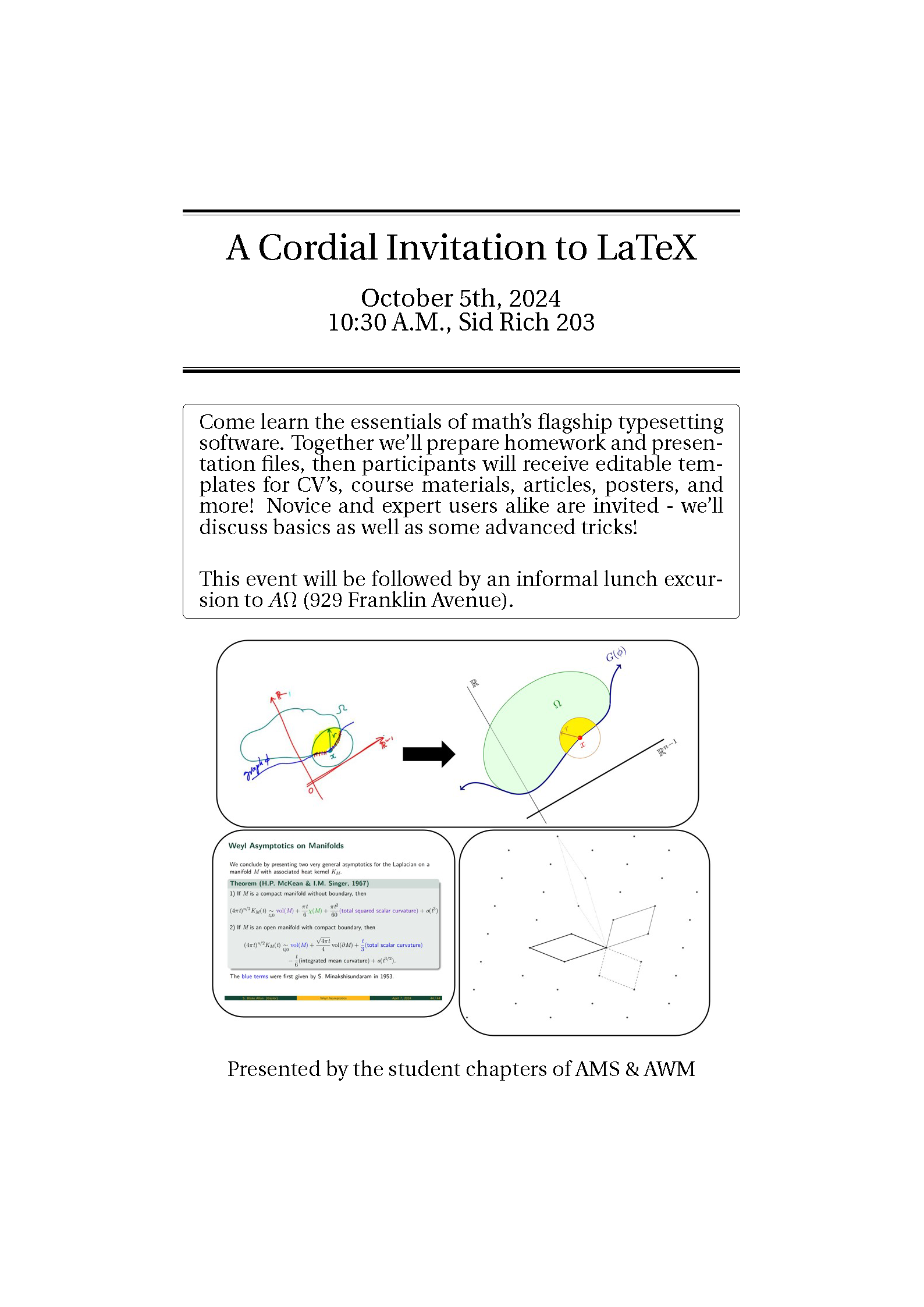
LaTeX seminar:
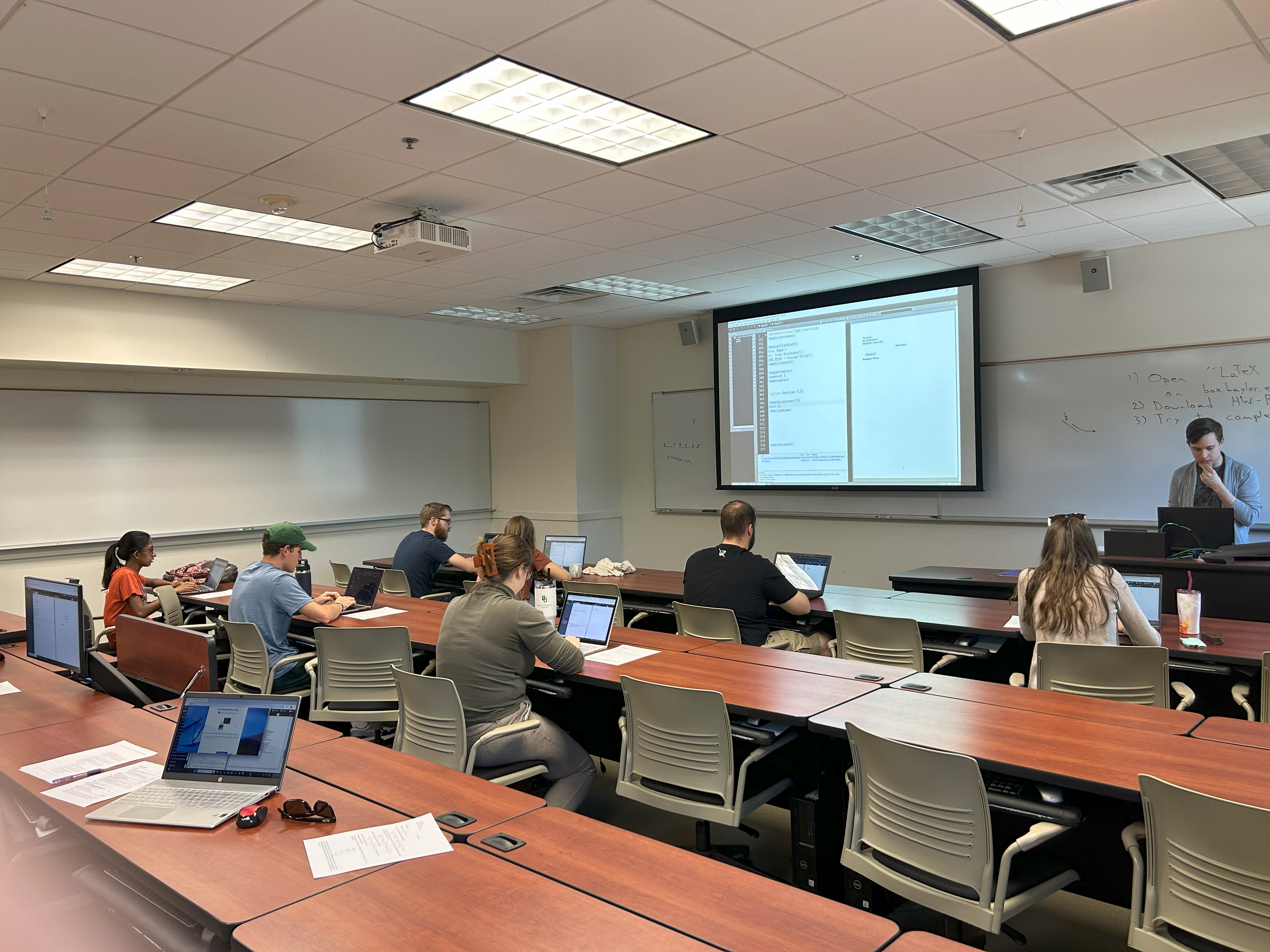
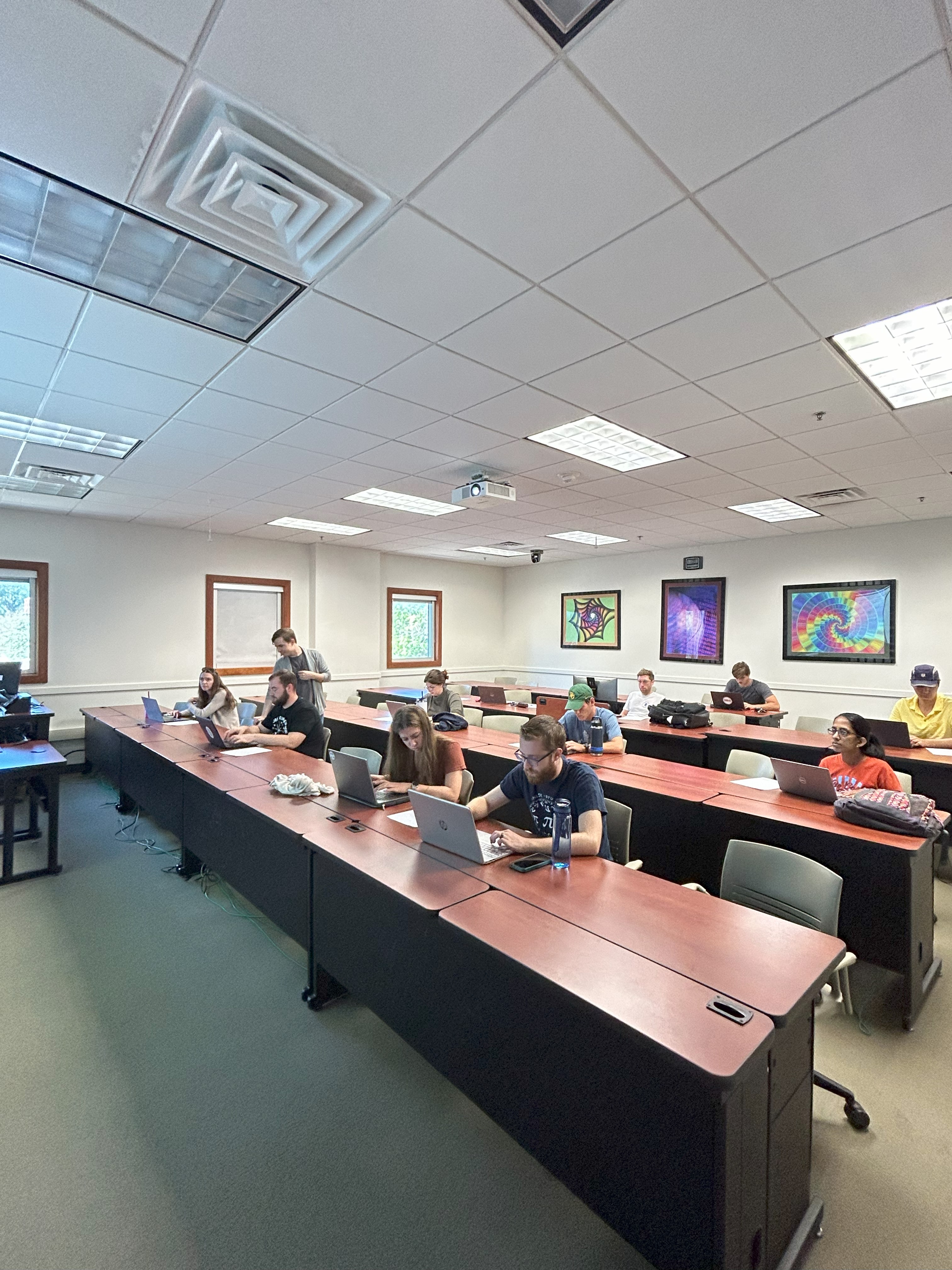
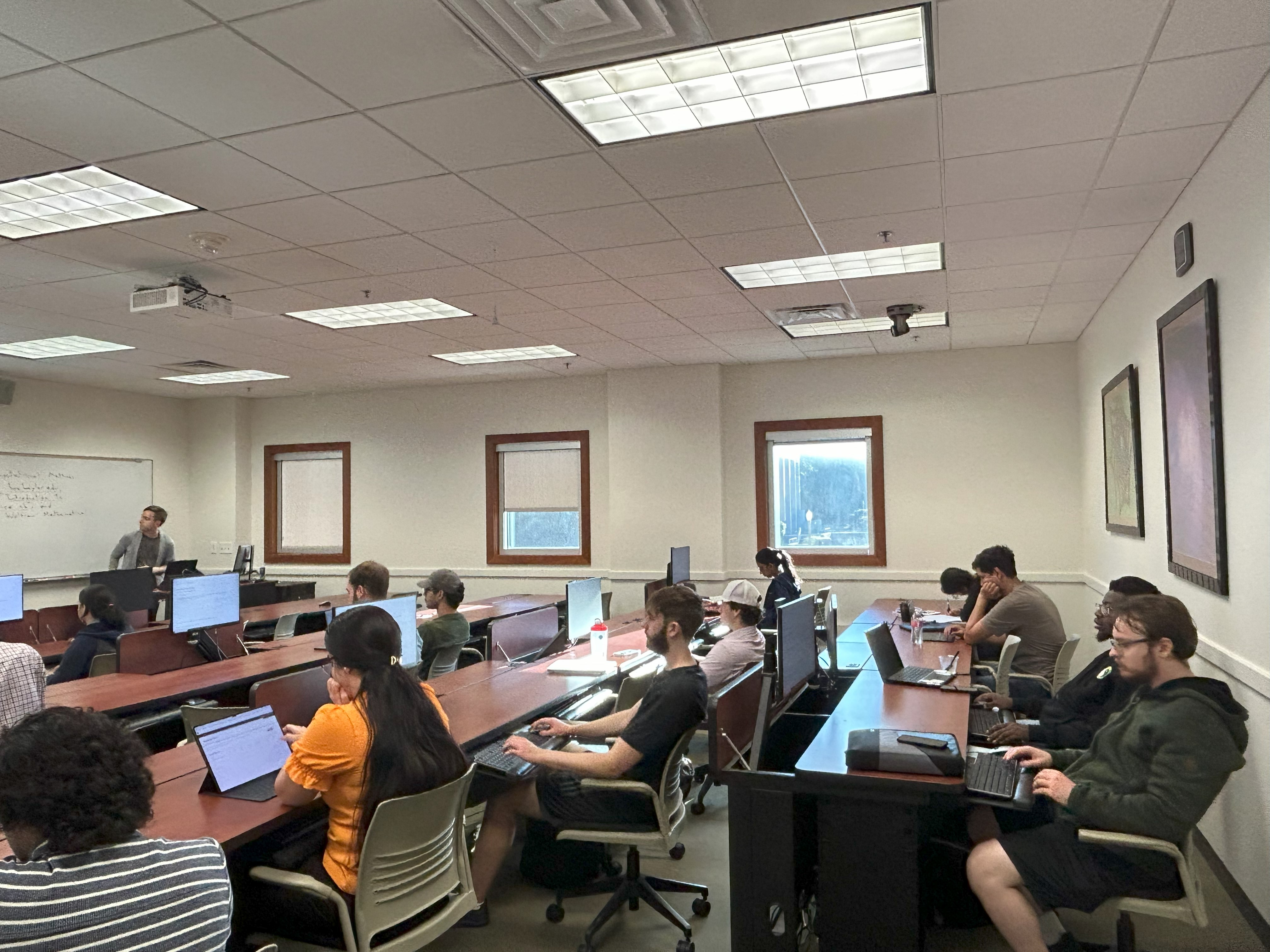
For the second event in this series, Blake Allan presented A Breezy Introduction to TeX Articles and the Beamer Class. Graduate students gathered in the computer lab to refine their skills with LaTeX, a uniquely mathematical typesetting language. They bravely struggled with curly braces, forward slashes, and the like to produce beautifully formatted documents with naturally embedded mathematical symbols! Students also shared templates for slide presentations, poster exhibitions, exams, homework, and more.
Math software seminar:
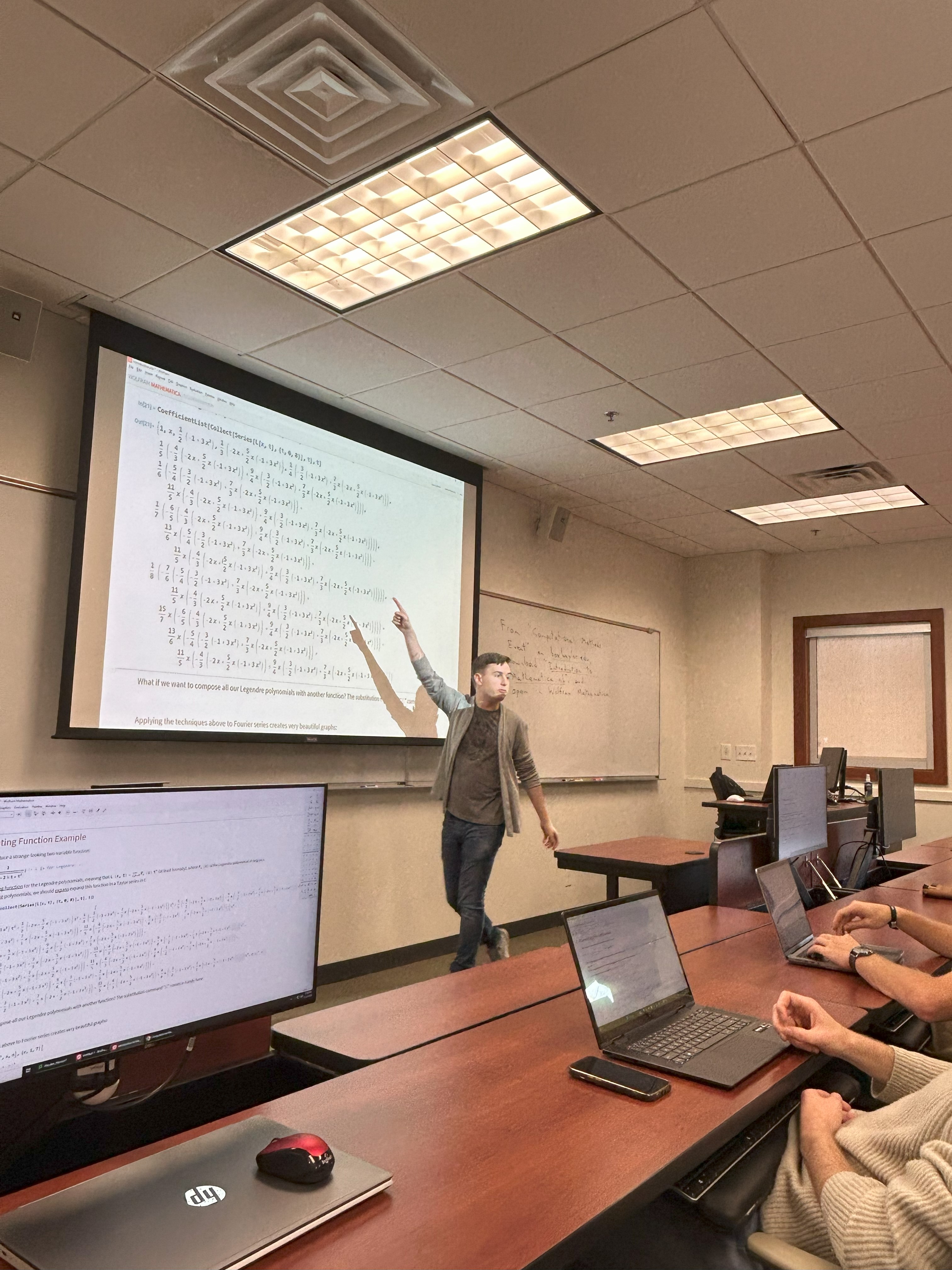
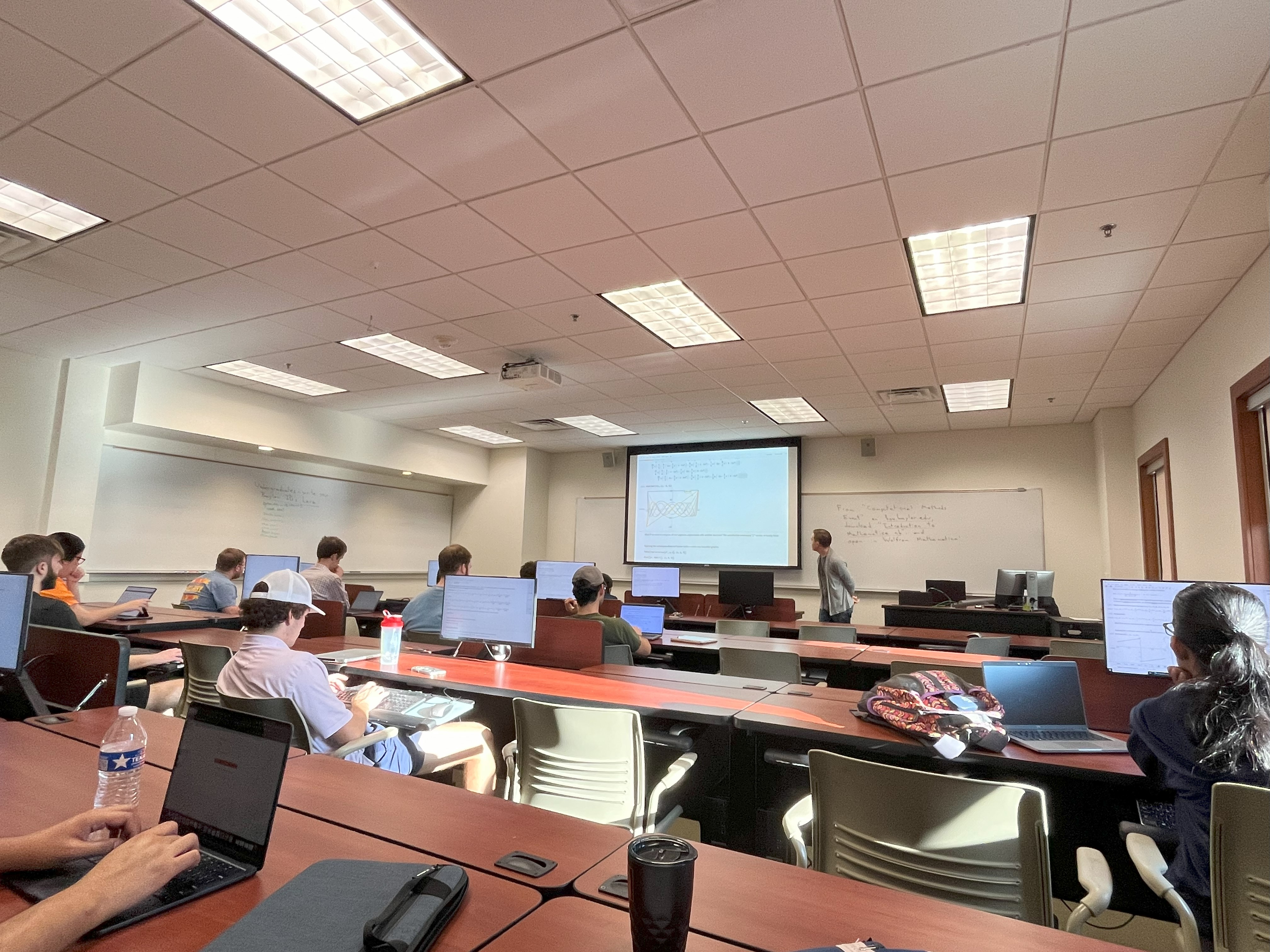
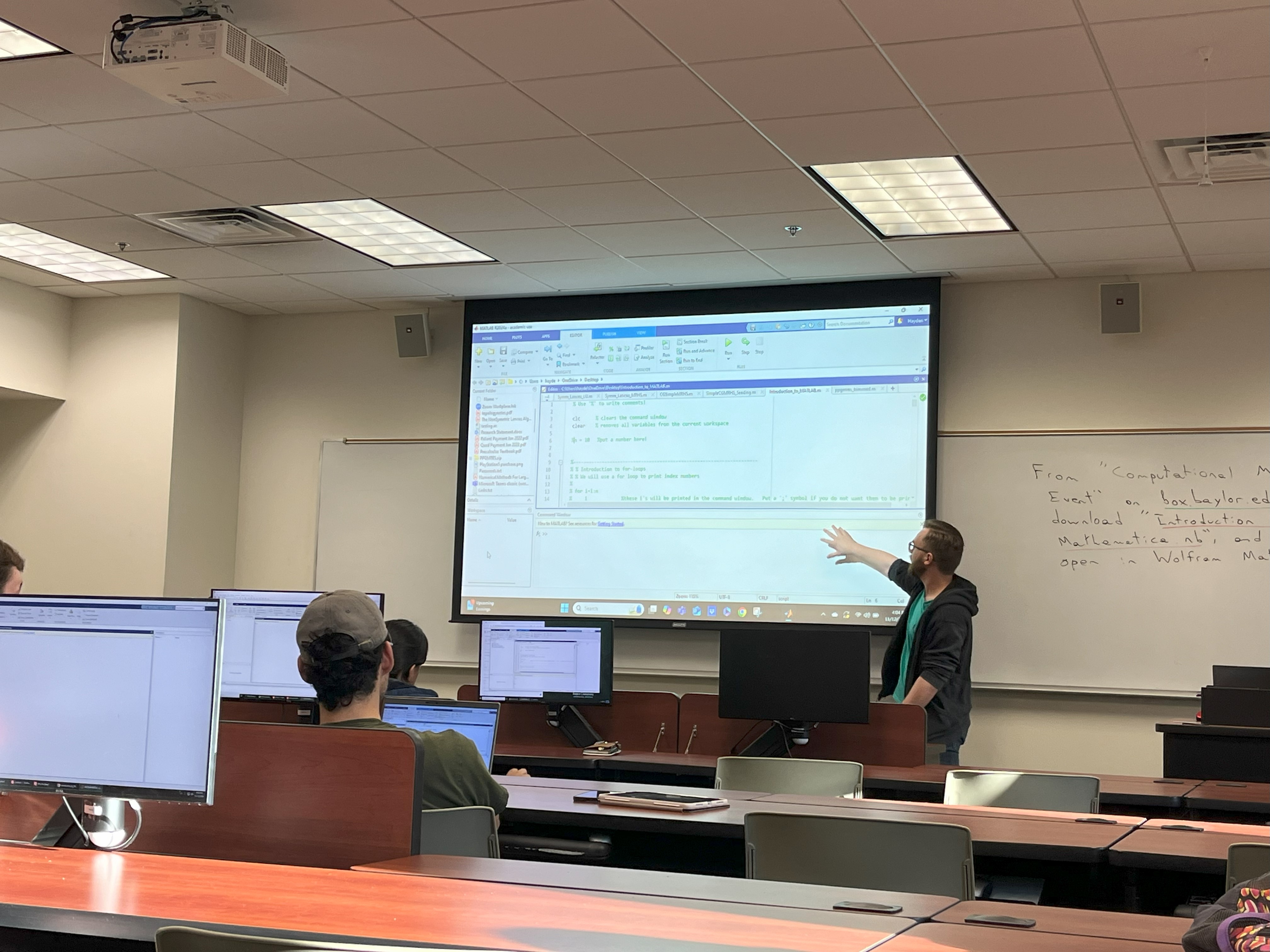
The final seminar for the semester focused on computational methods in mathematics. Presenters were Blake Allan (Symbolic Magic with Mathematica) and Hayden Henson (Numerical Wizardry with MATLAB). Members of the graduate cohort and guests from the Möbius Mathematics Society gathered in the lab to create dynamic plots, simplify scary-looking expressions, and generate novel symbolic results with Wolfram Mathematica. They also explored the possibilities of large-scale numerical computations and matrix operations with Mathworks MATLAB, used across industrial and academic applications.
We look forward to the exciting developments in store for future seminars.